
Here's a question that separates the seasoned rider from the Sunday pootler: what's the most cost-effective modification you can make to your bike that'll actually pay dividends every time you throw a leg over it?
No, it’s not a loud end can or a remap that adds three horsepower you'll never notice, or anodised bling that actually does very little. The simple answer is: a rear hugger.
If you've been riding for any length of time, you'll know exactly why. If you haven't, stick with us.
The Problem Nobody Asked For
Wind the clock back to the era of twin-shock suspension. Your average UJM (Universal Japanese Motorcycle, for the uninitiated) had a rear mudguard that sat properly over the back wheel, keeping road spray where it belonged – which is to say, not all over you and your bike's rear end.
Then the industry collectively decided that mono-shock suspension was the future, which it undoubtedly was, but created an unexpected consequence: suddenly there was a gap between the back wheel and the underside of the seat.
The result? The rear tyre becomes an exceptionally efficient centrifugal pump, flinging water, road grit, salt, and whatever other delightful cocktail you've been riding through directly onto the rear shock, linkage, and everything else under and around the seat. The standard rear mudguard, now mounted high and proud, is about as useful as a chocolate teapot.
Anyone who's owned a mid-80s sportsbike will tell you exactly what happens to a rear shock that's spent a winter being sandblasted by road crud. Seized linkages, corroded shock bodies, knackered seals – it's not a question of if, but when.
The Pyramid Innovation
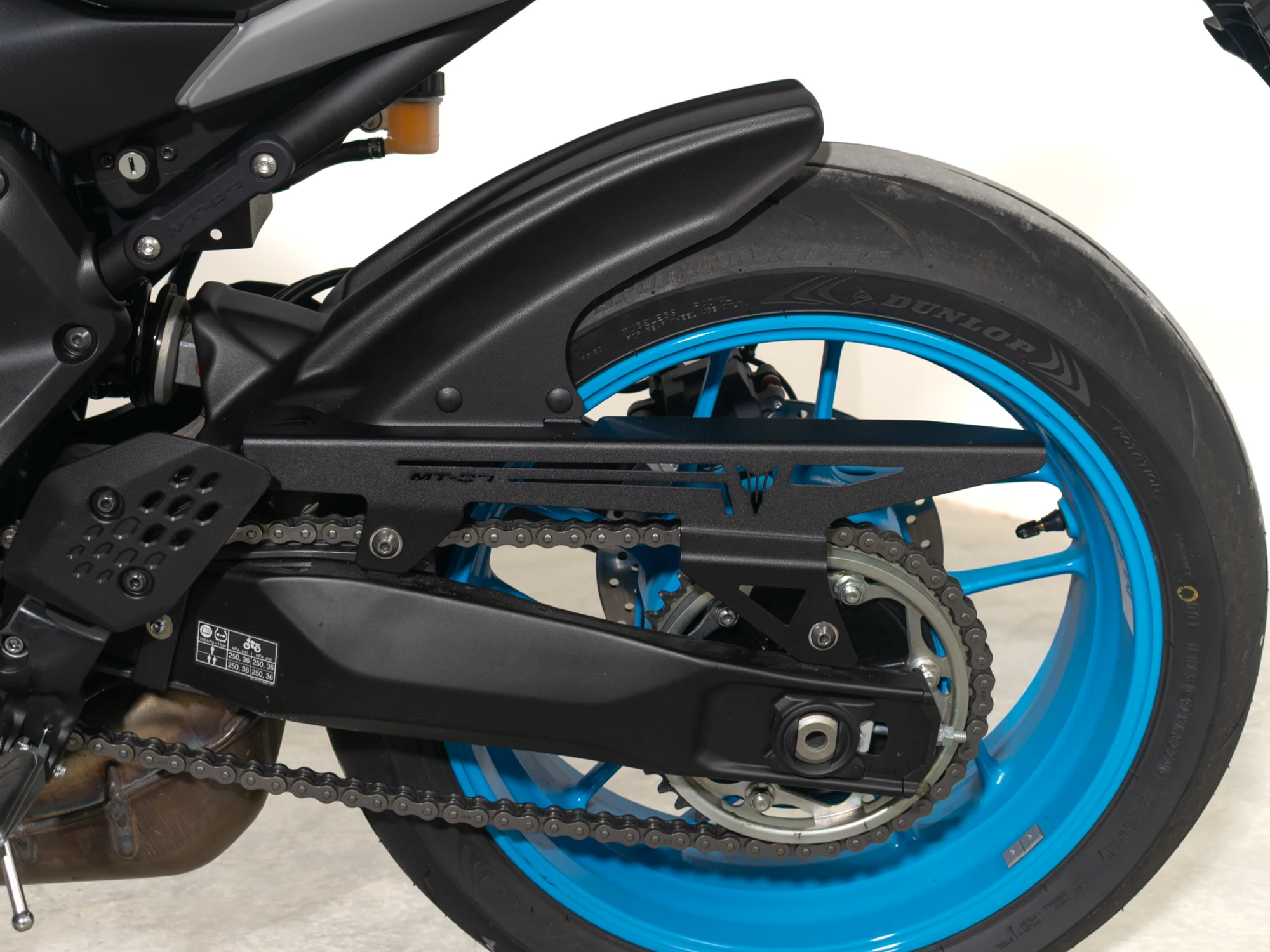
Enter Pyramid Plastics in 1988, who had the bright idea of creating a supplementary guard that mounted to the swingarm and followed the wheel's profile closely – ‘hugging’ it. They released versions for the Kawasaki AR50/80 and Yamaha RD125LC, coined the term "hugger," and within a decade the things had become so ubiquitous that manufacturers started offering them as factory options.

Which raises an obvious question: if huggers are such a good idea – and they demonstrably are – why don't manufacturers just fit them as standard? The answer, as with most things that make perfect sense but don't happen, is cost. Bikes are built to price points, and since huggers aren't required for type approval, they're an easy line item to delete.
Choosing Your Weapon
Huggers are typically designed specifically for each bike, with the size and coverage determined by the model itself rather than chosen as an option. In other words, you’re not usually picking between multiple hugger sizes for your bike – the design you get has already been optimised to suit it.

Some bikes will suit a shorter, more minimalist design that shields the shock from the worst of the spray without adding bulk, while others allow for a longer, fuller hugger that follows the wheel’s arc more closely and offers increased coverage. The approach depends entirely on the bike’s layout and mounting points, but the goal is always the same: effective, well-integrated protection.
On certain models, the hugger may also integrate with the chainguard for a cleaner, more cohesive look, mounting to existing swingarm points and covering the wheel, chain, and everything in between.
Material Science
Like any decent bit of motorcycle kit, huggers are available in multiple materials, though in most cases the material is chosen to best suit the specific bike and design rather than offered as multiple options.

ABS plastic is your entry-level option. It's the same stuff most of your bike's bodywork is made from – tough, impact-resistant, and reasonably light and will do the job without requiring you to remortgage the house.
Carbon fibre is the lightweight solution. Stronger than steel, weighs practically nothing, and looks absolutely mint with that signature weave pattern. The catch? It's more brittle than ABS and it costs considerably more.
Fibreglass (GRP) is often used where a painted finish is required, offering good strength and durability. In real-world applications, particularly with properly manufactured parts, the weight difference compared to ABS is minimal, making it a solid all-round choice.
The Case For Fitting One
A hugger is far from the most exciting modification you'll ever make. It won't make you faster, it won't turn heads at the café, and it certainly won't give you bragging rights in the pub. But here's what it will do: every time you ride in the wet – which, let's be honest, is most of the time in this country – it'll be working quietly in the background, keeping expensive suspension components clean and protected. That rear shock you paid £400 for? It'll last considerably longer. Your linkage bearings? Less likely to seize. The electrical connectors under your seat? Staying dry and functional. It's preventative maintenance, basically. Boring, sensible, and absolutely worth doing.
Fitting is straightforward if you buy from a reputable manufacturer too. A decent hugger should be model-specific, bolt straight to your existing swingarm mounts, and require nothing more exotic than basic hand tools. No cutting, no bodging, no drilling holes in things that shouldn't have holes drilled in them. Half an hour's work, and your bike's rear end is properly protected.
Sometimes the best modifications are the ones nobody notices. This is one of them.
