
Cast your mind back to 1926. Stanley Woods is hurtling round the Isle of Man TT course on his Norton, and bolted to the front is something that looks decidedly makeshift: a slanted number board with a simple, clear square screen stuck on it. Crude? Absolutely, but that rudimentary bit of kit represents the birth of something that would fundamentally change motorcycling: the fairing.

The Racing Revolution
Woods probably wasn't thinking about revolutionising motorcycle design when he fitted his makeshift screen, he just wanted to go faster. And that's been the driving force behind fairing development ever since; the eternal quest for greater speed, comfort, and efficiency.
Through the 1920s and 30s, fairings began appearing mainly on endurance racers and record-breaking specials. Often hand-formed from aluminium or even leather, and usually built in sheds rather than factories, they were certainly crude and as a result, stability was hit and miss, but the concept was sound even if the engineering wasn't.
After the war, things became more serious. Grand Prix racing took off, factories got involved, and aerodynamics became part of the engineering brief. MV Agusta were among the pioneers, their exquisitely made racers wearing sleek full fairings while being hustled around by the likes of John Surtees and Giacomo Agostini. These bikes showed just how much performance could be unlocked by managing airflow.
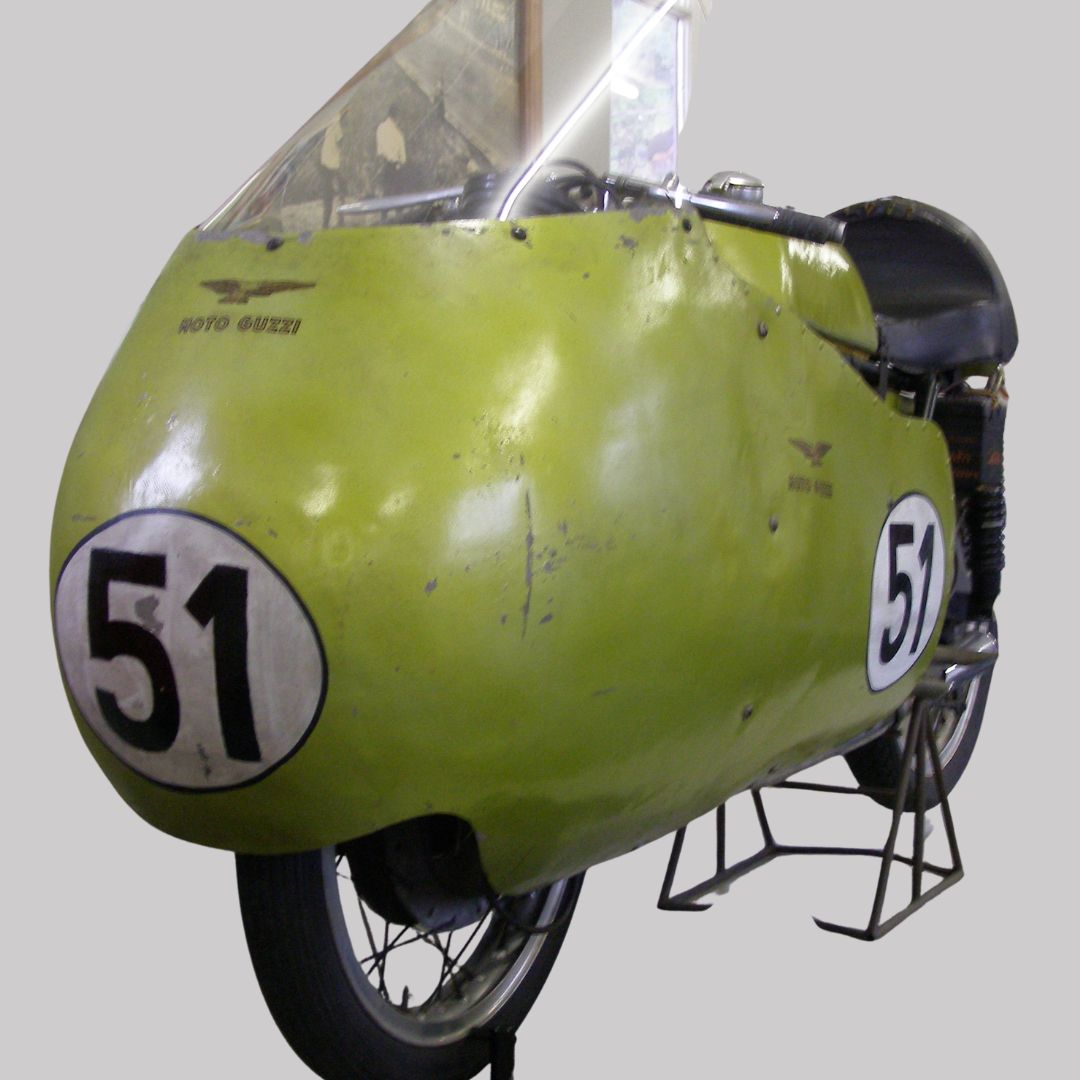
Then came the dustbin fairing. If you’ve ever seen photos, you’ll know them instantly: huge, bulbous shells that enclosed the entire front half of the bike. Aerodynamically, they worked - dramatically so - but they were heavy, caught crosswinds, restricted steering, and made suspension tuning a nightmare. By 1958, racing authorities had seen enough and banned them outright.
Taking to the Road
Road bikes, meanwhile, were taking a different path. BMW’s 1934 R7 concept was an early glimpse of how fairings might work for everyday riding, wrapping the bike in flowing panels that looked decades ahead of their time. In the late 1950s, as scooters boomed, manufacturers like Ariel and Vincent experimented with fully enclosed motorcycles such as the Leader and Black Prince. These aimed less at outright speed and more at comfort, cleanliness, and weather protection. They were clever machines, though proved too unconventional for most riders.
It was in the 1960s and 70s that fairings really started to find their place on road bikes. Aftermarket companies like Rickman, Avon and Windjammer offered bolt-on handlebar fairings and full touring setups that owners could fit at home. They weren’t always pretty, and some played havoc with handling, but for riders covering serious miles they were a revelation.

The real turning point came in 1976 with BMW’s R100RS. This was the first road bike with a factory-fitted full fairing, developed in a wind tunnel. It didn’t just look purposeful, it worked: wind protection was excellent, high-speed stability improved, and suddenly fairings weren’t an add-on, they were part of the bike’s identity.
From there, the floodgates opened. Sports bikes adopted full fairings for outright performance. Tourers leaned into large screens and frame-mounted bodywork for comfort. Naked bikes stayed naked, but even they began sprouting small bikini fairings and belly pans for a touch of wind deflection and style.
The Modern Era
Our understanding of aerodynamics - and the tools we have to analyse it - has continued to progress, and although today’s fairing and bodypanels look nothing like those of days gone by, they still protect riders from weather, reduce fatigue, improve fuel economy, and shield vital components. Materials have evolved too. ABS plastic dominates original and aftermarket equipment thanks to its strength and flexibility, while at the other end of the spectrum, carbon fibre - light, strong, and expensive - is usually reserved for race bikes and high-end exotica.

For most of us, fairings are about balance. Enough protection to make long rides easier, without losing the feel and character of the bike. That’s where modern aftermarket parts come into their own. Whether it’s a replacement screen, a belly pan, or a colour-matched seat cowl to tidy things up, the right fairing can transform how a bike looks and rides.
Fairings may have started as racing hacks and wind-cheating experiments, but they’ve become a core part of motorcycle design. Next time you tuck in behind a screen on a cold motorway run, spare a thought for Stanley Woods and that simple slanted number board. He probably had no idea where it would all lead.